Dr. Red Nose’ Diary – The Challenge of Converting to Video Services
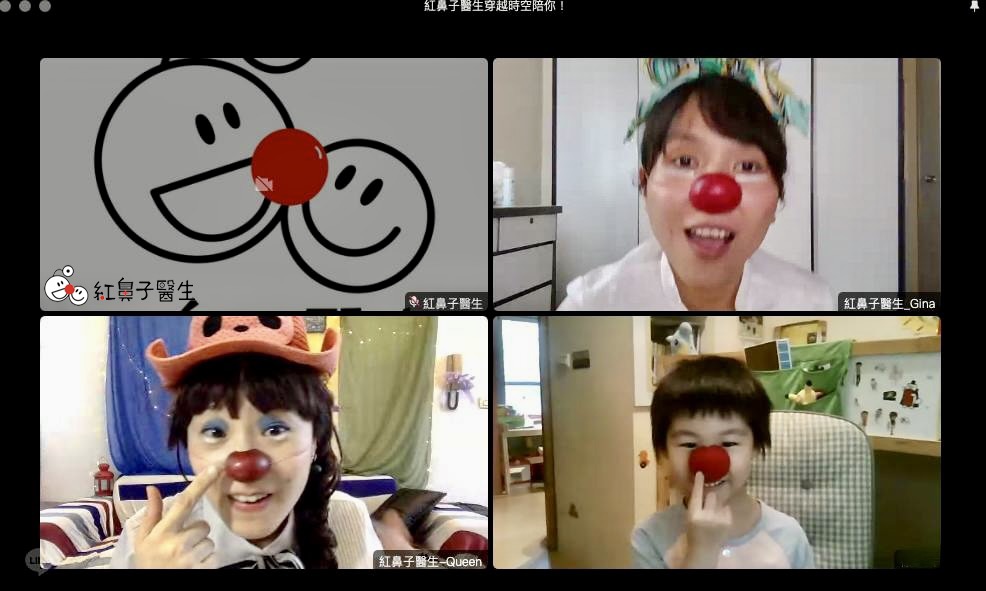
Before Covid-19 occurred, the hospitals that Dr. Red Nose visited for long-term partnerships from north to south and east could have as many as 21 on-site performances each month. During the pandemic, they were all suddenly suspended. As early as the first wave of the pandemic during the 2020 Lunar New Year, the Association quickly launched video training and work preparations, allowing Dr. Red Nose to continue providing uninterrupted companionship.
From in-person performances to online performances, is this a crisis or a turning point?
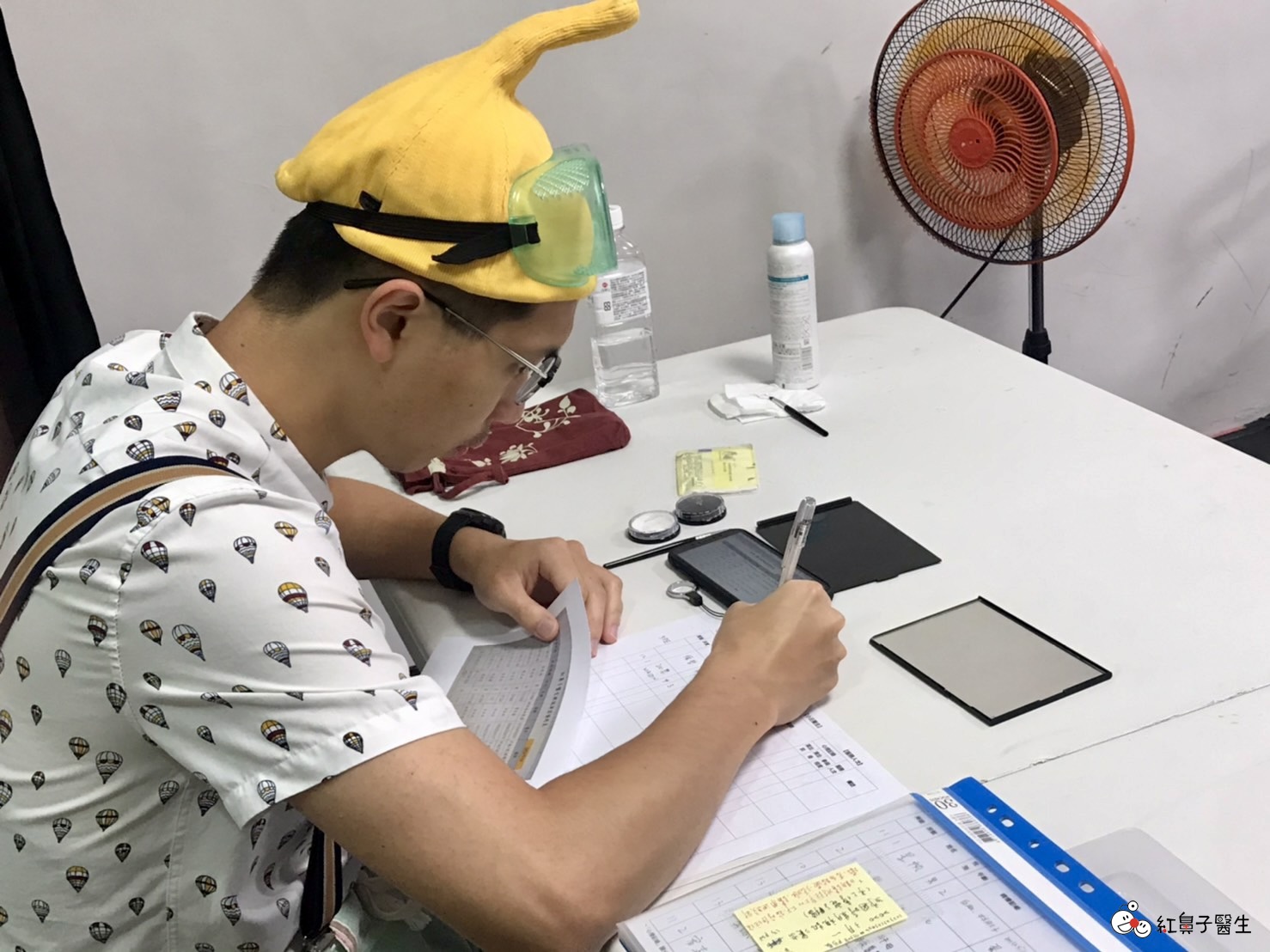
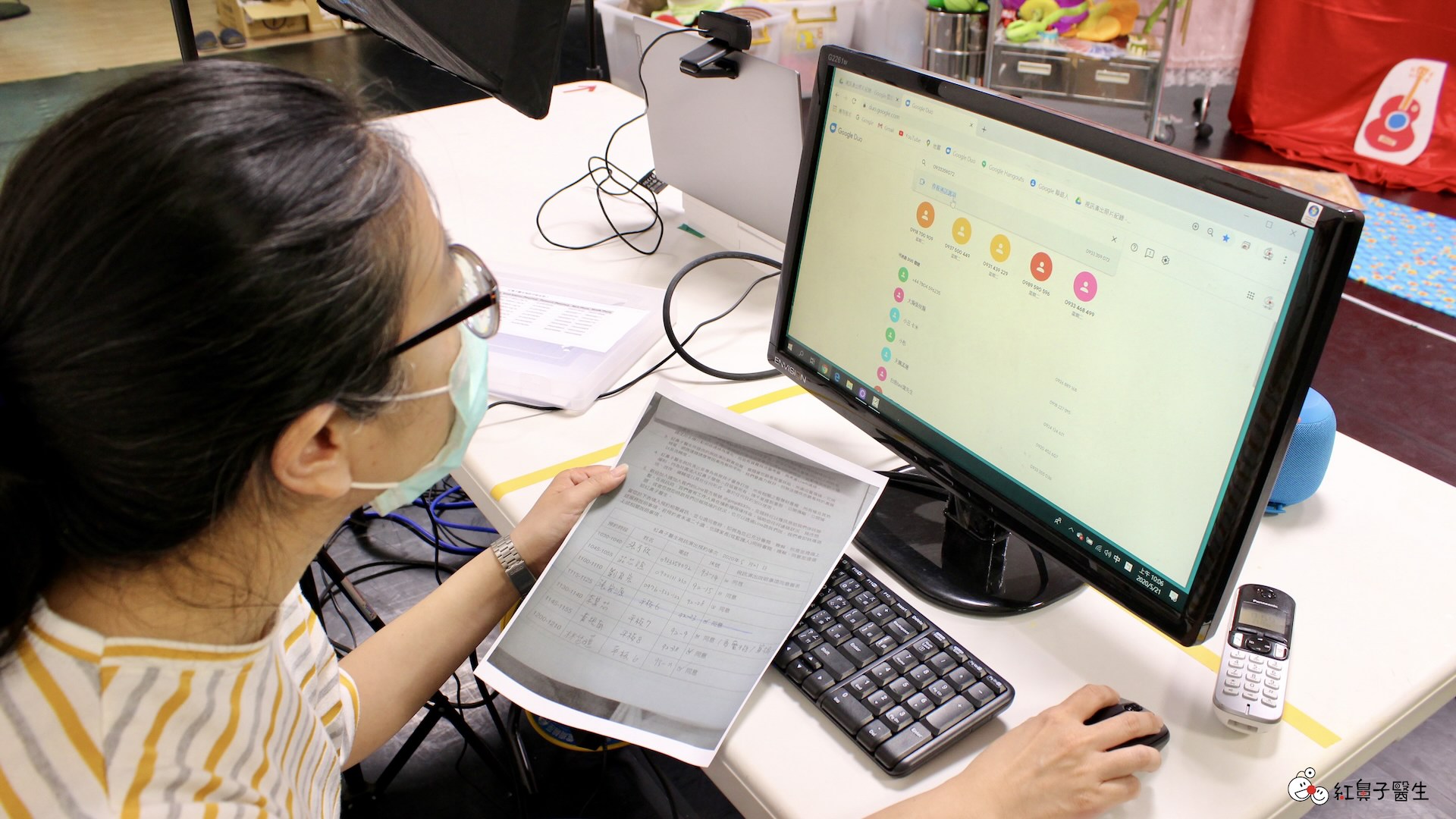
This transition was not as easy as flipping a switch. The performers first had to learn how to interact with the camera and understand the performance state and methods of communication within the frame. At the same time, they had to let go and seek out and try techniques that can only be played through the camera. By observing one another, they studied how to control volume, the relationship between distance from the camera, appropriately slowing down and extending the rhythm, and effectively allowing the children on the other end of the camera (sometimes with family members outside the frame as well!) to properly receive the performance. The technical team studied the purchase and use of equipment, evaluated the various advantages, disadvantages, and convenience of interactive platforms, and quickly developed a complete and detailed operational SOP manual, enabling every Dr. Red Nose to get up to speed quickly, serve as the backbone for the performance partners, and work together. The administrative team needed to arrange video workspaces as soon as possible, while also maintaining much more frequent contact with head nurses and social workers in the wards, explaining and inviting parents one by one, communicating the transition in service model, helping parents connect to the video interaction platform, and teaching them the video appointment process and feedback procedures. We practically had to invest twice the manpower and time we normally did in order to continue serving the children through video. At that time, the administrative team could (and could only) have one person enter the ward once a week to immediately update information on hospitalized children, invite and arrange video appointments, and then send the information back to Dr. Red Nose performing each scheduled shift.
During the second wave of the pandemic in 2021, transmission was rapid and urgent. It was even impossible for Dr. Red Nose to go to the rehearsal space together to conduct video sessions. Even more difficult was that the medical and nursing teams had no time to spare, and the administrative team could not enter the wards to explain and make arrangements for the children. The administrative team could only do everything possible to stay in contact with the children who had interacted with us most recently.
Rapidly Expanding the Service Audience: Those of You Who Need Dr. Red Nose, Come “Play” in the Video Cloud Together!
On the other hand, we quickly broadened the reach of our service by inviting hospitalized children and medical personnel throughout Taiwan who wanted to get to know Dr. Red Nose or needed their companionship to contact the Association and make video service appointments. However, this opportunity amid even tighter restrictions allowed Dr. Red Nose to spark connections with more children. We served children in Yilan, Changhua, Hsinchu, Pingtung, Taitung, and Lanyu, extending the public’s donation goodwill to more families and wards. We now continue to offer 10 video service sessions each week, reestablishing a steady rhythm of companionship between Dr. Red Nose and the children.
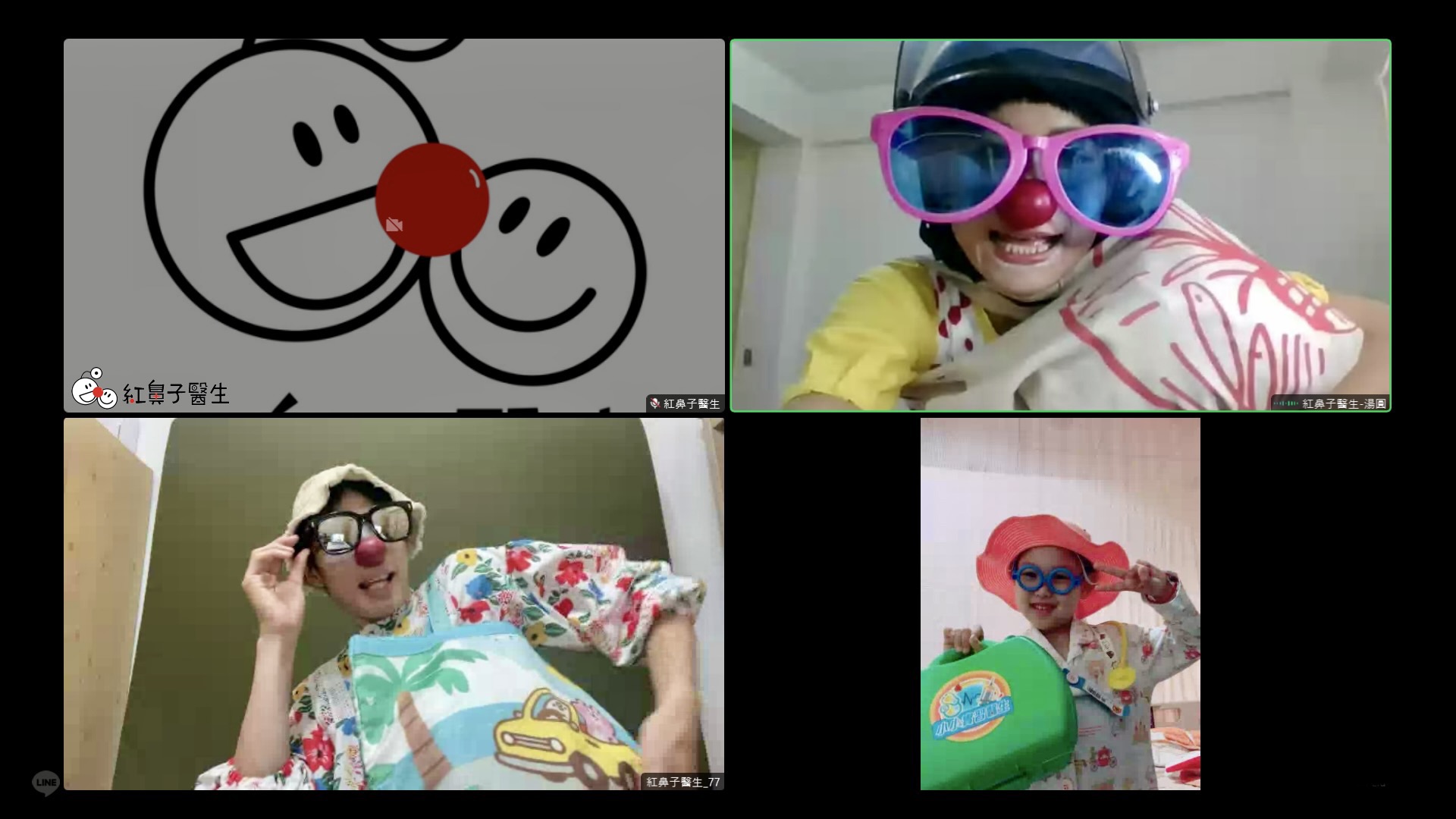
In addition, we took the initiative to invite our long-term partner in the wards, the “Wish Association,” to recommend potential service recipients. This gave us the opportunity to begin working with the “SMA Spinal Muscular Atrophy Association,” launching dedicated video sessions in sequence beginning during the summer vacation, starting in the Kaohsiung-Pingtung region and gradually expanding northward to serve patient families in the Taichung-Changhua-Nantou region.
During this process, I had many discussions and planning sessions with the passionate social worker Yixuan. We proposed and finalized the cooperation and division-of-labor model and discussed the visual design for promotional activities. Yixuan first handled patient registration and arranged video times. Then, before the video sessions, she scheduled time with Dr. Red Nose for a detailed online “explanation of disease types” and “handover,” helping us gain an initial understanding and basic concept of the patients before meeting them for the first time. We also tried our best to prepare props or segments that could be used in the performance according to the patients’ preferences and personalities. Compared with performing in the wards, video sessions offered a little more time to think and discuss in advance, enhancing the possibilities for variation and design in camera performances—an unexpected benefit.
After the video services, I specifically designed a questionnaire and invited the parents of SMA patients, or the adults who received the services themselves, to provide feedback one by one. This helped us understand how patient families felt about the entire process of service invitations, arrangements, coordination, and interaction. We also sent electronic blessing cards made from group photos taken during the video sessions. Not only that, Yixuan would later call to check in and collect verbal feedback. We maintained ongoing sharing and discussion with each other, hoping that these “new friends” would experience new care and artistic interactive services in their daily lives. Because every patient is also a family, when serving patients, we can additionally observe and sense through the interactions the methods of interaction that the other party may need or find suitable, their relationships with family members, and so on. These are all things Dr. Red Nose can review and fine-tune gradually, making the next video service better aligned with everyone’s needs.
Dr. Red Nose’ Vocation: This Is a Profession, Done Well for Those Who Need It
At work, Dr. Red Nose bring service recipients a brief period of time that differs from everyday life. We often hope to be the people who bring a little joy and comfort to others. This is unrelated to medical treatment; it is companionship—long-term and consistent companionship. Especially for patients who need to be hospitalized for extended periods, this little bit of “gold dust” in life may help positive energy take root. But many people often forget that anyone can be that handful of accidental “gold dust.” Our vocation is simply to treat this as a profession, an occupation, and do it well for those who need it.
Conversely, because of this work, we often receive drawings that children have made especially for us. Even if their strokes are immature, or children deliberately save two lollipops for us so they can share them with us when Dr. Red Nose visit, or familiar children seriously prepare props and costumes the day before our visit, just so they can dress up and go crazy with us for 10 minutes. More often, parents write thank-you messages of varying lengths, telling us that their child was very happy today, repeatedly asking to find their parents and play again the game they played with us that day, along with the deep and shallow smiles that once flashed across their faces.
Actually, you are Dr. Red Nose, and without a doubt, the “gold dust” for us. That powerful energy of feedback lets us know that next time, we will still energetically continue pushing open one ward door after another and come to your bedside, to your side.
If you support Dr. Red Nose’ charitable work, you can help us move this great wheel forward together through the following methods:
► Support us 💕 https://lihi.cc/FRxOE/ip
► Donate receipts ➡ Love Code 1801
► Charity shop 🎁 https://lihi1.me/5q4E8/ip
► Cross-sector collaboration 🤝 drn@drn.org.tw
► Group-buying with a smile 🍀 https://lihi3.me/3QTCV/ip
► Sign up as a volunteer 🙋🏻 https://lihi.cc/D7VMh/ip
► Become our ambassador and share our story 🌸