Dr. Red Nose’ Diary – Feeling the Connection in the Present
Returning to the Taipei Veterans General Hospital Day Care Center, we felt apprehensive. Would the older adults still recognize our “red noses”?
In the spring of 2019, we began exploring our journey of interacting with older adults. We stepped into the Taipei Veterans General Hospital Day Care Center as a trio of clowns once a week, trying various forms of performance: theater, music, dance, group activities… Gradually, we established connections with the older adults and began to outline the shape of our performances. Perhaps because of dementia, the older adults only vaguely remembered our clown names. They might forget what we had just done as soon as the performance ended, but they knew that we had bright red noses. They would ask why we had not come the previous week, and they knew that Dr. Red Nose would appear at this time every Wednesday. We slowly became part of their daily routines. But when the pandemic broke out in 2020, we could no longer easily enter and leave hospitals and centers, and everything was thrown into disarray.
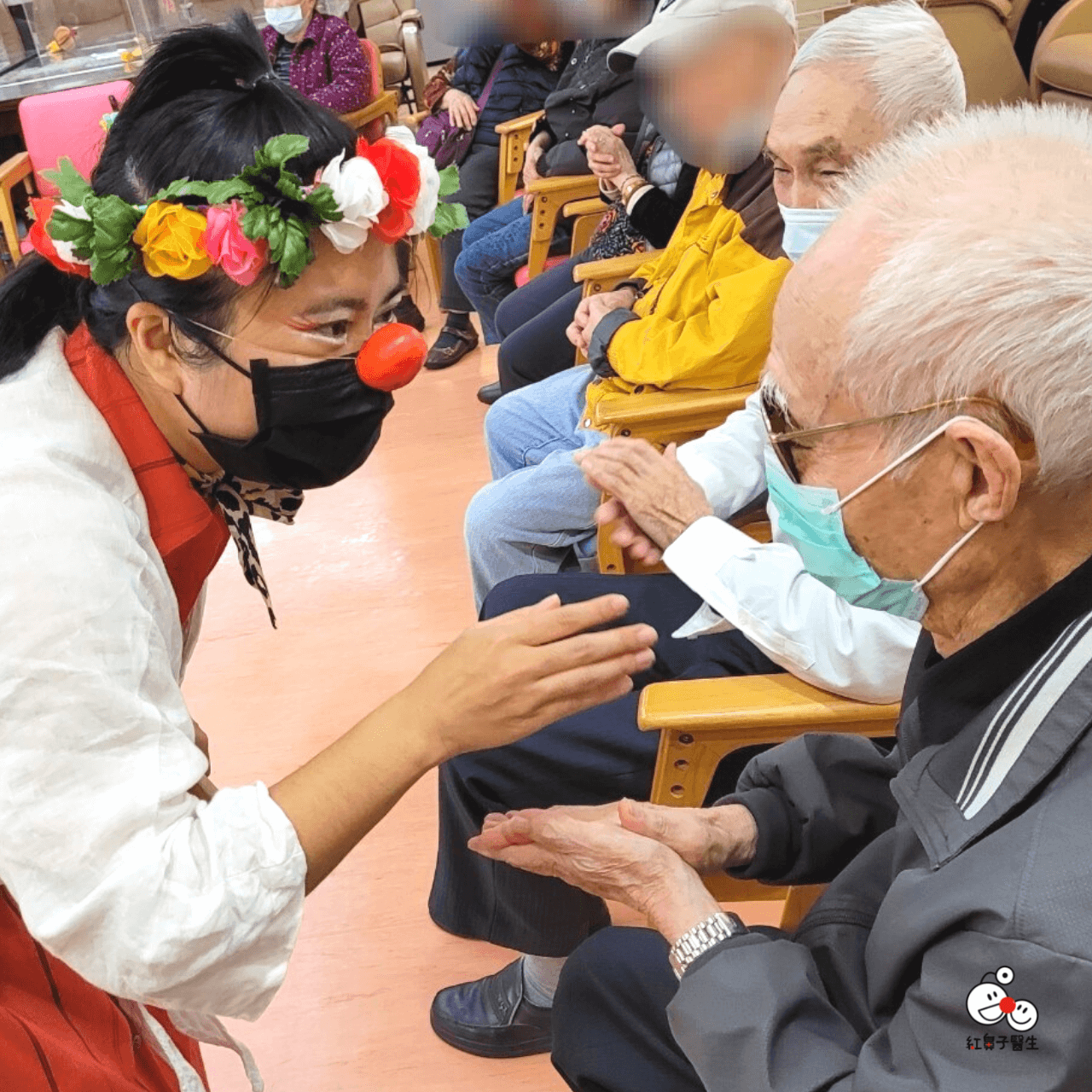
As the pandemic eased, we had the opportunity to perform in person again. Determined to start all over again, we once more entered the day care center. In the break room, we carried out our “standard operating procedure”—reviewing the plot we had discussed, charging the Bluetooth speaker and setting it up with the music for the upcoming performance, and dressing up as our clown characters. Then we moved our bodies, chatted with one another, or played clown games, gradually entering our performance state in different ways. Our companions all knew that we were nervous: how would the older adults react today? Would we need to rebuild our relationships all over again? While thinking these things over, we were already slowly making our entrance with our companions, following the music of the parade—“Hello, everyone. We’re back. We’re Dr. Red Nose!” We put our worries behind us and greeted everyone with abundant energy and enthusiasm. From then on, we would simply follow the feeling of being “clowns.”
“The handsome guys and beautiful ladies are here!” This was Uncle Jin’s (pronounced “Bei-bei”) first sentence whenever he saw us. “Welcome!” said the vice class monitor beside him. “You haven’t come for such a long time!” said the grandmother who always sat in the same spot. “Great, good!” said the grandma who always loudly agreed with us and gave us a thumbs-up. “Red noses!” said the grandfather who did not talk much but always liked pointing at our red noses. There was the grandmother who liked playing pushing-hands games; the grandma who always nodded when greeting us; the older gentleman who did not speak but liked moving along with us… Although some older adults still remembered our names only vaguely, and some continued to look suspiciously at us after we removed our clown costumes, while others were unable to express their reactions to our performance because of their conditions, they all still responded to “us”—perhaps through language, perhaps in the games, perhaps through touch. We felt that the “red nose” still existed in their feelings.
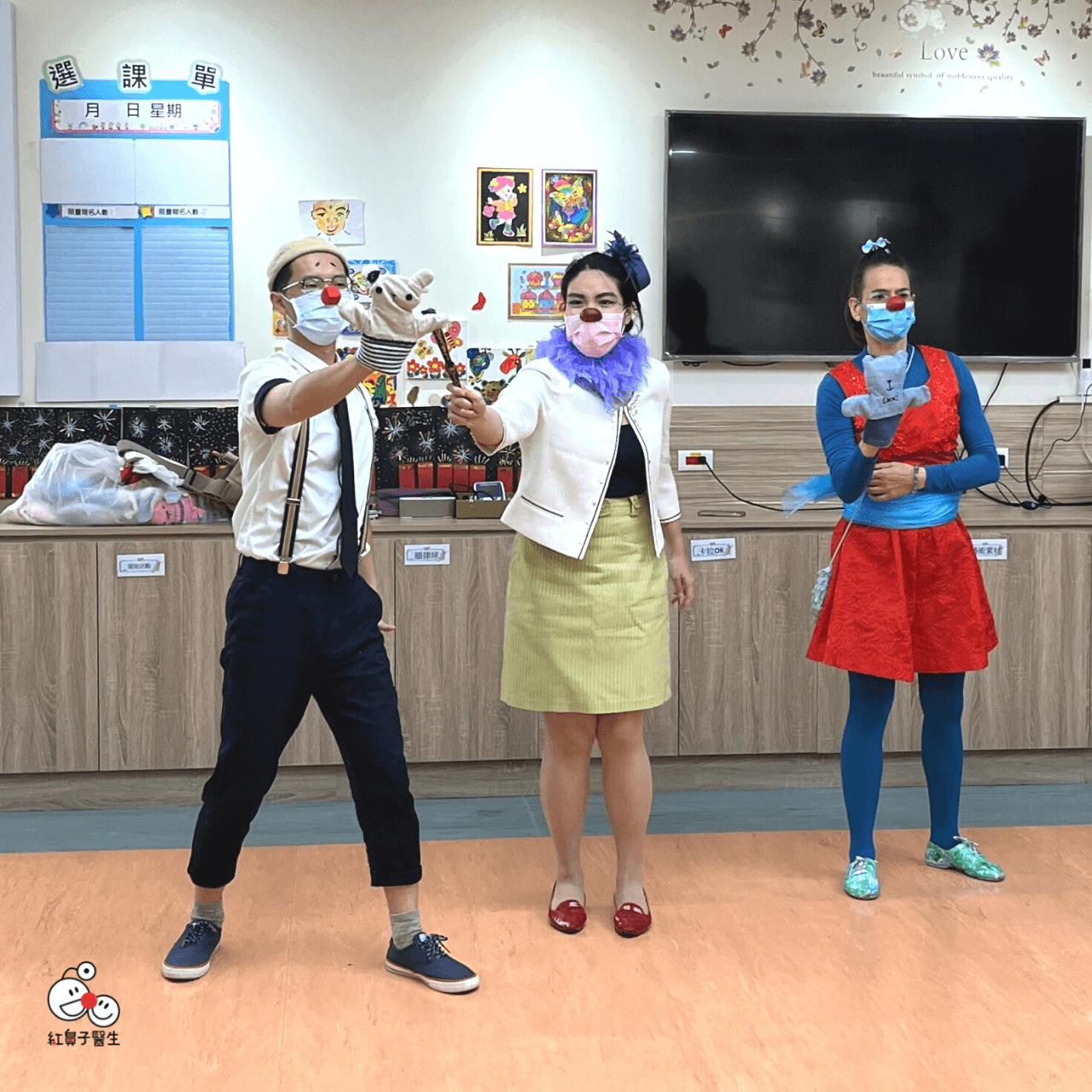
After all this time, things may have changed from the beginning, but at the day care center, everything was still so familiar: the scents, the feeling of the space, and the people—the caregivers who always gave us enthusiastic responses during our performances, the doctors we often invited onstage, the center director who gave us the greatest support, the social workers who often helped answer our questions, and the adorable older adults. When the performance ended, “See you next week!” and “You have to come again next week!” were still our familiar exchanges. Back in the break room, we discussed the wonderful moments of the day and considered what could have been better, continuing to explore clowning and our interactions with the older adults.
After leaving the day care center, Dr. Red Nose and the older adults would lose their connection and return to their separate lives. We would not bring it up especially, and the older adults might also put Dr. Red Nose out of their minds. Then, at the same time the following week, we would connect again. During this brief time together, it was not about what we gave them, but about mutually feeling and experiencing one another.
If you support Dr. Red Nose' public-interest work, you can join us in turning this great wheel through the following ways:
►Become our ambassador and share our story
►Official website http://drn.org.tw/
►Make a smile donation https://event.drn.org.tw/ahsR2/web
►Smile group purchase https://lihi3.me/3QTCV
►Sign up to help https://neti.cc/rWOAMMy
► Donate receipts to Love Code 1801 ► Collaborate with us drn@drn.org.tw
Date: 2022/02/16 Writer: Jun-Nan