Doctors with Red Noses and Drama Therapy?
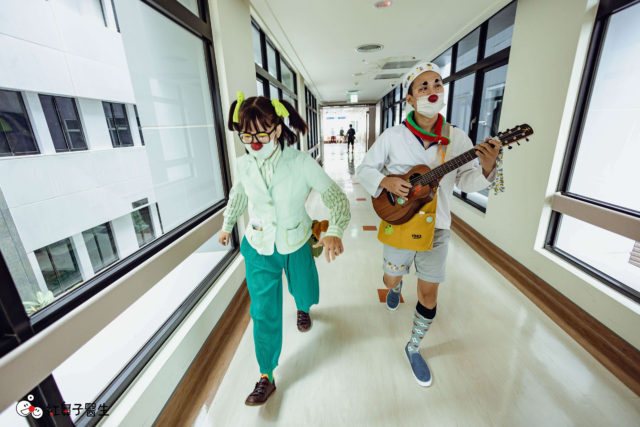
Doctors with Red Noses perform in hospitals to bring people the pleasant, relaxing “healing feeling.” Is this a form of drama therapy?
“Treatment” is not the intention of Doctors with Red Noses. Rather, through clown performances filled with humanity, they bring about a healing feeling that may arise naturally.
The Red Nose Clown Care Association often receives messages from the public saying that Doctors with Red Noses make them feel “very healed” and “very moved.” We also occasionally receive enthusiastic messages such as: “I’m very interested in drama therapy and would like to learn more about you Medical Clown!”
Doctors with Red Noses have long entered hospitals to spend time with patients, and regularly interact with groups with specific physical and mental needs outside hospitals as well. When Doctors with Red Noses make people feel a sense of “healing,” such as release, relaxation, pleasure, and creativity, can we say that the work of Doctors with Red Noses is a form of “drama therapy”?
This article would like to tell everyone: No, Doctors with Red Noses are “not” drama therapy! Next, let us explore together the relationship between the work of Doctors with Red Noses and drama therapy. The article is a little long, so grab a drink and some cookies to enjoy with it!
I. How did Doctors with Red Noses come about?
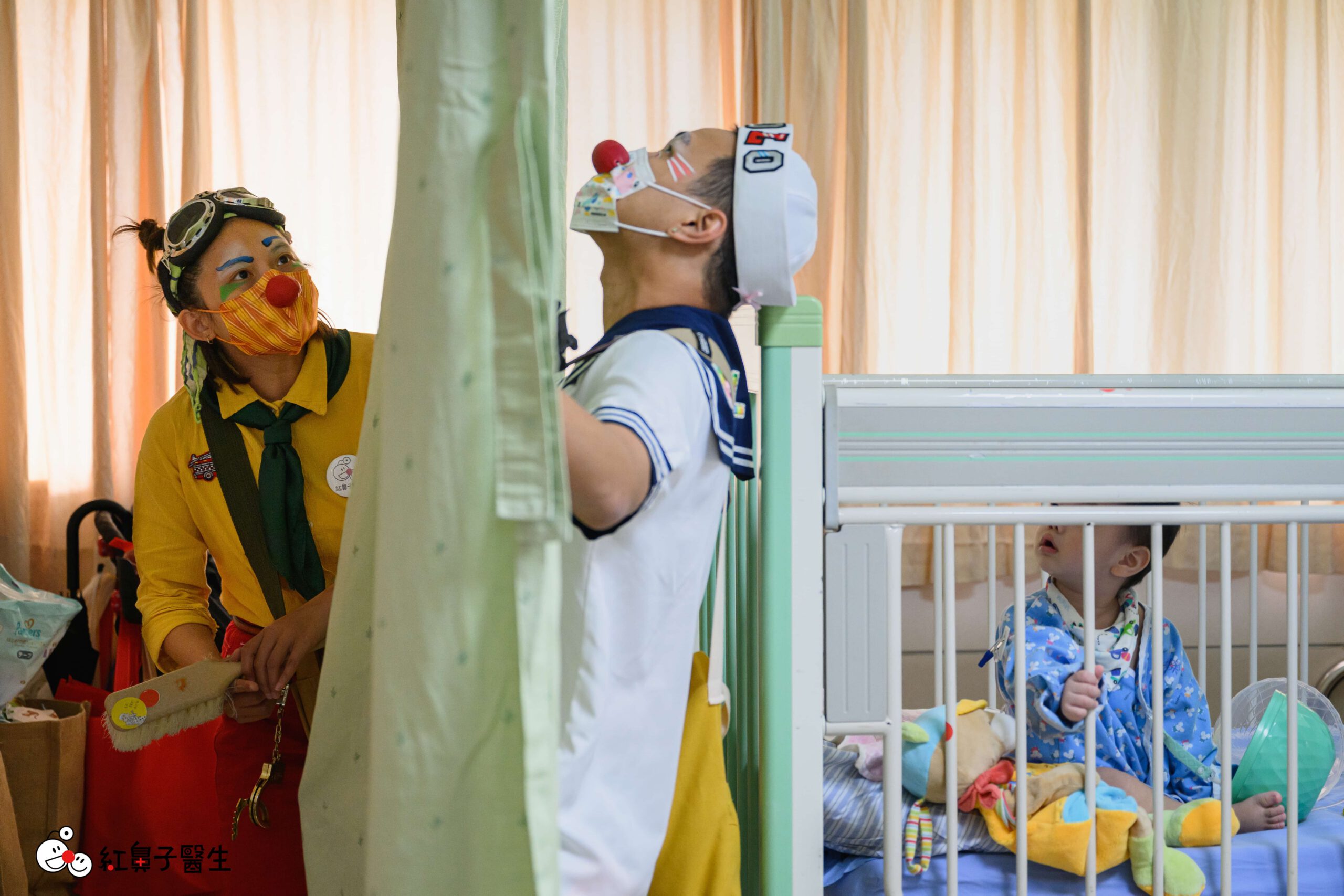
The year 1986 was an important milestone in the encounter between “clown performance” and the “medical setting.”
That year, one clown team and one program each in the United States and Canada[1]entered local hospitals to begin regular performances, opening a new chapter in the history of integrating clown performance into medical settings.
The medical clowns in the United States and Canada at that time later went on to establish organizations in various countries, primarily in Europe, and the work of medical clowns began to flourish around the world. Clowns performing in hospitals thus became a professional community with several names: “Medical Clown,” “Medical Clown,” “Hospital Clown,” “Health Care Clown,” or “Therapeutic Clown.”
Because there is no single operating standard for medical clowns worldwide, and because cultural and social conditions differ from place to place, the forms medical clowns take today are quite diverse, and their operations also vary. According to research, medical clowns abroad generally follow three paths: First, emphasizing that anyone who is willing can put on a clown costume, wear a red nose, and perform in hospitals and other places. All performers are volunteers and may perform without receiving clown-performance training; what matters is spreading love and joy. Second, clown performers belong to independent professional clown organizations, are required to possess professional performance abilities, and must also learn about medical settings. They perform in medical settings and other health-related institutions, and are paid for their performances. Third, similar to the second, except that clown performers belong directly to the hospital and are incorporated as members of the medical team[2] .
Taiwan’s Doctors with Red Noses belong to the second category above. Founder Ma Chao-chi studied under Le Rire Médecin, Europe’s first medical clown organization. After returning to Taiwan in 2015, she began performing in hospitals and formally established the association in 2017. The association primarily follows the operating system of Le Rire Médecin and has gradually developed various rigorous systems and support structures. Therefore, Taiwan’s Doctors with Red Noses must continue their professional development, including in clown performance, music, dance, and other abilities. They must regularly receive coaching and supervision, participate in group discussions, and write reflections. They must also continue studying psychological, medical, and social knowledge related to their work.
The association’s website contains the following description: Doctors with Red Noses performers use “interesting games, music, physical performance, and more to create tailor-made clown performances for various service recipients, helping everyone ease out of tense and anxious emotions and alleviate physical and psychological pain and stress through laughter.[3]” Through long-term regular performances, Taiwan’s Doctors with Red Noses help build a favorable and friendly medical environment.
At this point, I wonder whether everyone has noticed that all the descriptions above of medical clowns at home and abroad share one fundamental keyword: “performance.”
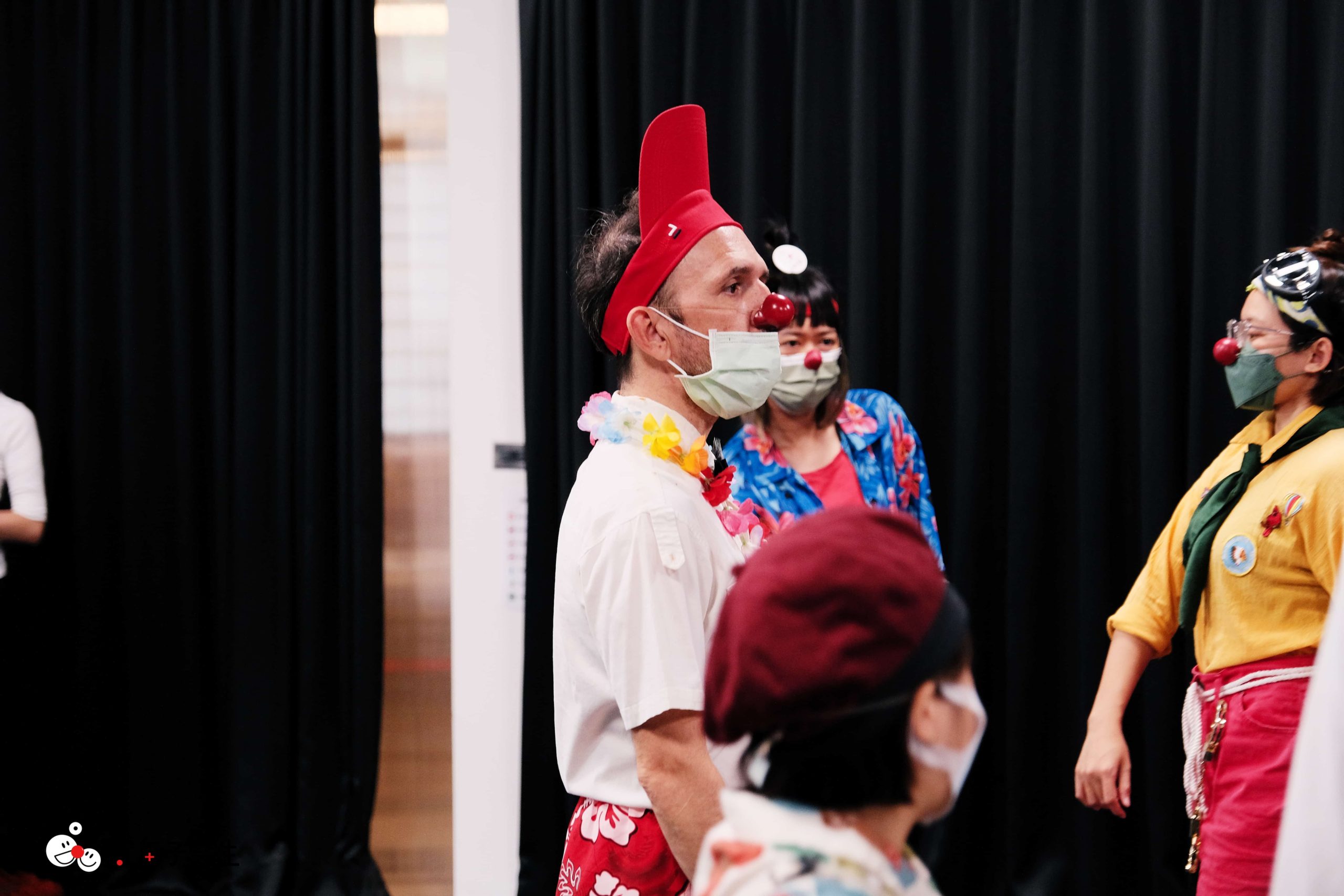
After more than thirty years of development, clown-doctor practices around the world have expanded from initially performing in “pediatric wards” to various settings related to “physical and mental health”[4] . Taiwan’s Doctors with Red Noses, established more than six years ago, have likewise expanded from hospitals to external settings. Regardless of the country, interaction setting, or population served, Doctors with Red Noses everywhere are basically engaged in a form of “performance”-based work, with “play and games” as their primary purpose.
In other words, behind the red-nose mask is an “actor,” and Medical Clown wearing red noses are a group of “clown characters with specific settings.” Doctors with Red Noses establish relationships with those they interact with as “playmates” or as “audience members watching a clown performance.” Everything is based on “performance.”
Now that we have broadly described Doctors with Red Noses as a type of theatrical performance work, let us next gain a preliminary understanding of drama therapy.
II. What is drama therapy?
“Drama therapy” formally emerged in the late 1970s, first becoming a professional field in the United Kingdom, the United States, and the Netherlands, and later influencing other countries.
Different regions and schools place somewhat different emphases in their definitions of drama therapy[5] . Here are definitions from three organizations as examples:
“Drama therapy is a form of psychotherapy. Drama therapists are both clinical professionals(clinicians) and artists. They use knowledge of theater and therapy as media for psychotherapy, including drama, story-making, music, movement, and art, to work with any issue. Clients can explore a broad range of diverse issues and needs indirectly, from autism, dementia, and physical/sexual abuse to mental illness, in order to achieve psychological, emotional, and social change.” (The British Association for Drama Therapists, BADT website[6] )
“Drama therapy is the intentional use of drama/theater processes to achieve therapeutic goals. Drama therapy is an active, experiential practice. This approach can provide participants with an environment for storytelling, goal setting and problem solving, expressing feelings, or catharsis. Through drama, the depth and breadth of inner experience can be actively explored, and interpersonal relationship skills can be strengthened.” (North American Drama Therapy Association, NADTA website[7])
“Drama therapy is a helping practice that uses drama and theater techniques systematically and with clear intention to accompany, guide, and intervene in psychotherapy. Through an action-based experiential process, it enables clients (individuals or group members) to achieve self-exploration and personal growth, transform ineffective coping and communication patterns, relieve psychological distress, and improve mental health.” (Hong Kong Association of Drama Therapists, HKADT website[8])
From the above, we can see that drama therapy involves several key elements: therapist, client, therapeutic goals, therapeutic relationship, and therapeutic techniques. In summary, when therapeutic goals have been established, the therapist, with clear intentions, uses drama/theater techniques and processes, combined with knowledge from the psychological field, to construct and develop a therapeutic relationship with the client and assist the client in experiencing some form of transformation or change.
How are “therapeutic goals” established? This depends on details such as the client’s expectations and needs, developmental stage, and circumstances, as well as the therapist’s theoretical orientation and therapeutic intentions. The focus may be on addressing troubling symptoms or promoting the client’s “creative potential” at various levels[9] or other goals.
Another important point is that the relationship between the drama therapist and client must be established on the basis of a mutually agreed-upon “therapeutic framework.” In other words, both parties must jointly safeguard the rules and boundaries of therapy, such as time, place, frequency, number of sessions, and rights and responsibilities. Once a therapeutic framework is in place and both parties agree to enter into a professional, ethical, and contractual therapeutic relationship[10] , the drama-therapy journey can begin under predictable conditions. Each therapy session usually includes at least three stages: “Warm-up, Action, and Closure.” However, the actual situation depends on many factors, including the therapeutic school and orientation, the therapist’s style and expertise, the setting or program requirements of the therapeutic work, the situation and conditions of the people served, and the circumstances at the time….
After saying so much, let us now discuss the relationship between the work of Doctors with Red Noses and drama therapy.
III. “Doctors with Red Noses” and “Drama Therapy”
At present, the U.S. National Library of Medicine alone contains more than two thousand academic papers related to medical clowns, most of which investigate whether the work of medical clowns brings about “healing and change.” Taiwan currently also has two formally published local medical papers.
To date, the author has read only about ten. If we make a preliminary summary based solely on the conclusions of these few papers, we can see that medical clowns have certain positive effects, such as helping improve the atmosphere of medical environments, regulating family members’ moods, and reducing the potentially damaging effects on patients as medical care becomes overly focused on “curing disease,” among others. Excerpts from the discussions of three studies follow:
A group of German scholars synthesized previous research and roughly categorized four areas of impact brought by medical clowns:[11]
- Physiological: Laughter can stimulate and regulate the immune system by releasingendorphins
- Emotional: Laughter allows positive feelings to replace negative feelings and releases stress
- Cognitive: The clown’s performance shifts the patient’s attention from their own condition to an imagined situation and supports the patient in learning new ways to express themselves.
- Social: Laughter creates a connection between children and clowns and stimulates more interaction
A seven-year Swedish study of interactions between hospital clowns and sick children identified three major results through meta-analysis:[12]
1 A quality of care that transcends boundaries: By creating a magical safe space, the inner needs and desires of patients can emerge, thereby focusing on the healthy side of sick children rather than on their illness. It creates a moment of respite in which children can temporarily forget that they are facing an ordeal, focusing instead on pleasant fantasies. During the shadowy moments of their lives, it introduces a parallel “lighter side of life.” This is the “magical attachment” between the clown and the sick child.
2 Establishing a quality of care that “asks for nothing”: Joy is an important psychological quality. “Joy without demands” is unrelated to duty or return, nor does it require adjustment. The focus is on children’s autonomy and on fostering a happy companionship. Emotional interaction formed through humor creates more space to highlight the healthy and powerful aspects that sick children possess.
3. Easing the quality of care: Clown performances bring a positive redistribution of attention in care. Hospitals are usually full of difficult moments for children; clowns provide positive distraction through medical care and reduce the perceived weight of that care.
Research on Taiwan’s Doctors with Red Noses: Positive Effects on the Emotional States of Sick Children
In the first Taiwanese paper on Doctors with Red Noses, Associate Professor Wei-Wen Wu of National Taiwan University’s Department of Nursing found that Doctors with Red Noses had positive effects on the emotional states of children undergoing cancer treatment:[[[]DESIGNHU_TOKEN_000171]]][13]
Combining routine medical care with a one-time clown activity helped improve short-term positive emotions in children with cancer; for children without cancer, it also effectively reduced short-term psychosocial stress.
Doctors with Red Noses primarily use two strategies, “entertainment” and “distraction,” to help hospitalized children, both younger and older, handle their emotions.
The Doctors with Red Noses program brought equally enduring positive short-term effects on emotional states for both younger and older children, overturning the stereotype that Doctors with Red Noses are effective only for younger children .
Clowns can enhance short-term emotional well-being among children across age groups (emotional well-being) . Although positive emotions gradually fade after Doctors with Red Noses leave, short-term positive emotions may very likely be reactivated or take on new forms each time the clowns arrive.
Although the positive effects and changes brought about by medical clowns are gradually gaining academic support, the work of medical clowns still cannot be called drama therapy. Why not?
From the basic “therapeutic framework” perspective: First, Doctors with Red Noses are “actors.” They do not define themselves as “therapists,” and most have not received drama-therapy training. Second, Doctors with Red Noses come with the intention of “coming to play” and “coming to perform,” not with therapeutic intentions or goals. Third, Doctors with Red Noses appear in randomly assembled pairs or trios and cannot fully know which patients, family members, or medical teams they will encounter during each shift. Therefore, Doctors with Red Noses have no opportunity to agree in advance with any party on specific work goals. Fourth, although Doctors with Red Noses enter hospitals and institutions to perform at fixed times, patients and family members have not directly agreed with them on a definite number of interactions or length of stay, and so on. Based on these points alone, it is clear that Doctors with Red Noses have not established with any party a contract founded on a therapeutic relationship. Since a drama-therapy framework does not exist, Doctors with Red Noses are of course “not” practicing drama therapy.
IV. “Doctors with Red Noses” and “Healing, Therapeutic Effects”
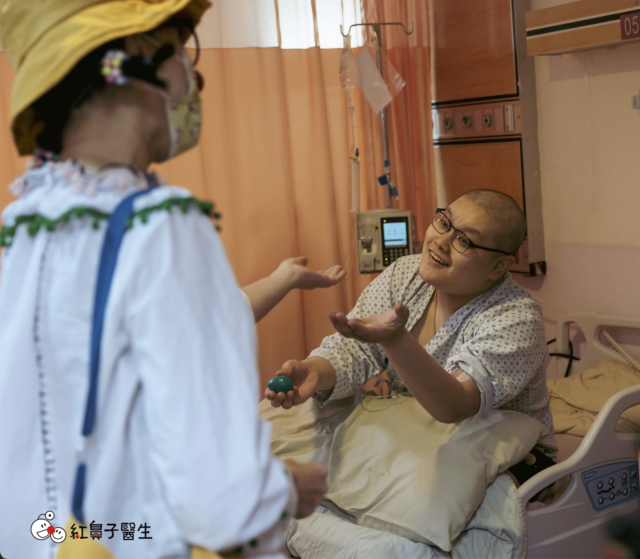
4-1 The relationship between “drama/theater” itself and “healing, therapeutic effects”
The Greek philosopher Aristotle believed that “imitation” is part of human nature. This instinct brings people happiness and compels human beings to begin creating[14] . Drama was precisely the result of ancient humans’ need for collective life: out of reverence for nature, they developed rituals expressing their desires by imitating gods, heroes, and other elements, gradually forming the prototype of drama.
Aristotle believed that “tragedy” could guide people to release their inner emotions and achieve purification of the soul. Some Western research, based on this idea of catharsis, has suggested that ancient dramatic rituals and ceremonies could be regarded as a form of “spiritual and emotional liberation for individual groups and community health.” Indeed, as early as the fifth century BCE, a paper appeared explaining that “watching dramatic performances” could serve as a therapeutic technique to help regulate patients’ various moods. All of this reveals the relationship between drama and human emotions, as well as historical perspectives on drama’s healing potential[15] .
British drama therapist Phil Jones points out: “The roots of drama therapy lie in drama itself.” He traced the history of the development of drama and therapy. Because many pioneers continued to explore drama’s healing qualities in different parts of the world, and because broader developments in health and drama/theater accumulated over time, people increasingly recognized that the therapeutic potential of drama and theater was part of “maintaining well-being or returning to health.” Through slow accumulation, practitioners in different places gradually developed concrete concepts and working methods, and drama therapy emerged as a profession in the 1970s.
Jones says drama therapy can be effective because it is grounded in the healing dimensions of drama and theater activities themselves: the processes of “creativity, performance, and action.” Citing research, he notes that “creation” contains elements such as “inspiration, change, new combinations, and new actions,” which can bring about “a balance of sensation and order.” When people are troubled or ill, they experience absurdity and disorder. If they can engage in creative work, it can produce a counteracting effect. Therefore, creation is important both for health itself and for growing out of unhealthy conditions[16] .
The English word “therapy” has the Greek etymological meaning of “healing,” while “healing” derives from “hale,” meaning “whole.” Therefore, the essential nature of therapy and healing is “making the self and relationships more whole.” Jones titled his important work “Drama as Therapy. Theatre as Living” (“Drama as Therapy. Theater as Life.”[17]), clearly emphasizing that “drama itself is therapy,” and that drama’s importance lies in making people and life more whole.
4-2 What kind of drama are Doctors with Red Noses, and what is the healing they bring like?
As we can see from the above, drama itself contains therapeutic effects. As a form of drama—and specifically drama performed in the form of “clowning”—Doctors with Red Noses embody a distinctive kind of healing. Here are three examples:[[[]DESIGNHU_TOKEN_000222]]]
◎ When Doctors with Red Noses appear in colorful clown costumes in a calm, orderly hospital ward, their mere presence stimulates the sensory atmosphere, filling people with curiosity and drawing them into a non-real, imaginative, dramatic situation.
◎ Because clown art places particular emphasis on the clown character’s innocent nature, clowns express their emotions during various kinds of improvisational play and sincerely present their vulnerability. This allows the voice of authentic humanity to flow through the cold hospital ward, enabling sick children and family members to feel something from it and perhaps even identify with or project onto it. During this interaction, sick children and family members may develop new self-awareness or take actions in response to their desires.
◎ Performances by Taiwan’s Doctors with Red Noses are deeply influenced by the training of French performance master Jacques Lecoq. With “the spirit of the child” (l’esprit enfantin) as their core attitude and “play” (le jeu) as their primary intention[18] , Doctors with Red Noses actively capture patients’ attention and interest in various ways, gain a certain degree of communication and cooperation, and develop games that can be played. In the process of trying to establish relationships, because clown characters are often overly attached to or focused on details, this tendency to “make mistakes” often places sick children in the smarter position. They can thereby express their individuality and their right to choose whether to agree or refuse, rather than remaining merely the passive role of someone who must receive various medical instructions in the ward. Once they can sense themselves and freely express their will and strength, sick children easily gain a sense of satisfaction from self-connection.
Precisely because Doctors with Red Noses perform as clowns who interact closely with patients, treat the other person as the subject, and base their work on the other person’s immediate needs, the playful performance situation enables them to approach, accompany, regulate, motivate, and transform participants’ feelings and states in the moment in a non-realistic yet gentle way, and even to assist or directly help the other person speak up. Therefore, although “treatment” is not the intention of Doctors with Red Noses, clown performances filled with humanity may bring about a natural healing feeling[19] .
V. Conclusion
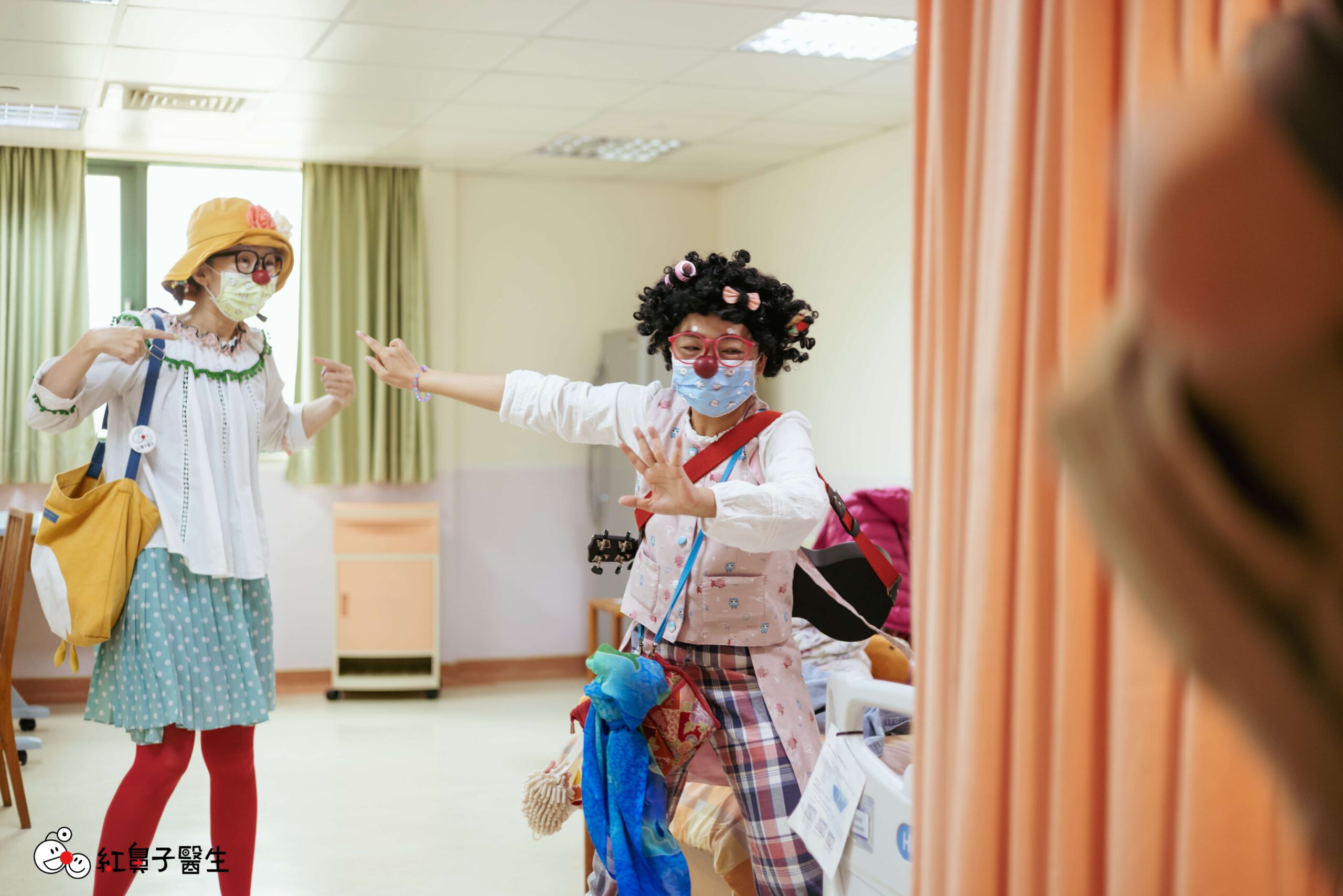
From a broad perspective, the work of Doctors with Red Noses does indeed catalyze certain positive benefits for individual patients, families, ward environments, medical teams, and society. This is aligned with drama therapy’s pursuit of psychological, emotional, behavioral, individual, and social change. However, under rigorous definitions, the two have clear differences in their work structures, role identities, work intentions, and methods. Therefore, a “Doctors with Red Noses performance” cannot be regarded as “practicing drama therapy”[20] .
Yet the healing feeling clown performances bring to many people is real. When free and uninhibited clowns come to wards and institutions and interact closely with people, they spark all kinds of situations. Games and play give people the opportunity to bring out suppressed or overlooked feelings and reactions, thereby revealing precious humanity.
Finally, let us quote Giora Seeliger, artistic director of the international Red Nose organization in Austria: “The ideal medical clown should be an ‘artist of encounters’ in medical settings—an art form that creates through meetings and encounters between people.[21]” The hope of Taiwan’s Doctors with Red Noses Association is for Doctors with Red Noses to continue training and growing, meet people through more mature clown art, and jointly create a healing influence
References
- Phil Jones (2002).Drama Therapy (translated by Su-Chen Hung, Da-Ho Yang, Chi-Chung Hsu, Wen-Ling Kuo, et al.). Wunan. (Original work published in 1996)
- Landy, Robert J. (1998).Drama Therapy: Concepts, Theories, and Practices [translated by Pai-Ling Lee, Shih-Hung Wu, Chih-I Wu, Kuang-Yuan Hung, Hui-Yu Tseng; reviewed by Chiu-Jung Wang and Chih-I Wu]. Psychological Publishing. (Original work published in 1994)
- Aristotle (2014).Poetics (translated by Hsiao-Peng Liu). Wunan.
- Chia-An Cho (2021). Doctors with Red Noses: Improvisational Performance Training and Hospital-Site Strategies for Medical Clowns in Taiwan [unpublished master’s thesis]. Graduate Institute of Theatre Arts, National Taiwan University
- Hsiao-Hua Chang (2004). Introduction to Drama Therapy.Journal of Theatre Studies8 : National Taiwan College of Performing Arts.
- Claus Barkmann, Anna-Katharina Siem, Nino Wessolowski, and Michael Schulte-Markwort. Clowning as a supportive measure in pediatrics – a survey of clowns, parents and nursing staff. [BMC Pediatrics. 13, Article number: 166 (2013)
- Donna Koller and Camilla Gryski (2008). The Life Threatened Child and the Life Enhancing Clown: Towards a Model of Therapeutic Clowning. Evidence-Based Complementary and Alternative Medicine. 2008 Mar; 5(1): 17–25.
- Lotta Linge (2013). Joyful and serious intentions in the work of hospital clowns: A meta-analysis based on a 7-year research project conducted in three parts. [International Journal of Qualitative Studies on Health and Well-Being. 2013; 8:1-8
- Maria Rosa da Silva, Maria Cristina da Costa Marques, Alexandre Vinicius Xavier Penha, Susana Caires. Constructed and disseminated behaviors of the hospital clown. [Cien Saude Colet. 2022 Jun;27(6):2449-2458.
- Orit Karnieli-Miller, Orna Divon-Ophir, Doron Sagi, Liat Pessach-Gelblum, Amitai Ziv, Lior Rozenta. More Than Just an Entertainment Show: Identification of Medical Clowns’ Communication Skills and Therapeutic Goals. [Qualitative Health Research. 2022 Volume 33, Issue 1-2.
- Wei-Wen Wu, Frank L. Lu, Cheng-Shi Shiu, Chia-Chun Tang, Shiann-Tang Jou, Jiann-Shiuh Chen, Yen-Lin Liu (2021). The effectiveness of a medical clowning program on improving emotional status among hospitalized children undergoing cancer treatment: A quasi-experimental study. [Journal of Nursing Scholarshipp. Volume 54, Issue 2https://doi.org/10.1111/jnu.12720
- Red Nose Clown Care Association website:[[[]DESIGNHU_TOKEN_000318]]]https://drn.org.tw/who-we-are/
- The British Association for Drama Therapists website:[[[]DESIGNHU_TOKEN_000323]]]
- North American Drama Therapy Association (NADTA) website:[[[]DESIGNHU_TOKEN_000326]]]
- Hong Kong Association of Drama Therapists (HKADT) website:[[[]DESIGNHU_TOKEN_000329]]]
- Code of Professional Ethics for Counselors of the National Federation of Counseling Psychologists’ Associations, R.O.C.:[[[]DESIGNHU_TOKEN_000332]]]https://www.tcpu.org.tw/legal-and-ethical-complaints/5-professional-ethics-code-for-counseling-psychologists-of-the-national-federation-of-counseling-psychologists-association-of-the-republic-of-china.html
- Chia-Lin Tung (2008). A Feasibility Study on Applying Clown Red-Nose Masks in Drama Therapy, in Journal of Theatre Studies, Issue 4 (2008/09/01), pp. 149–162.
[1] The Clown Care Unit of New York’s Big Apple Circus in the United States, and Canada’s Child Life Therapeutic Clown Project.
[2] Cho Chia-An (2021). Doctor Red Nose: Improvisational Performance Training and On-Site Strategies for Medical Clowns in Taiwan Hospitals [unpublished master’s thesis]. Graduate Institute of Theatre Arts, National Taiwan University, pp. 9–17.
[3] The “Doctor Red Nose Caring Clowns” Association website, “Introduction to Doctor Red Nose”: https://drn.org.tw/who-we-are/
[4] Examples include geriatrics, day care for older adults, rehabilitation, children and adolescents with specific physical or psychological conditions or needs, the preoperative preparation stage, patients in comas, hospice care, disaster victims, psychiatric wards, and so on. Reference: Maria Rosa da Silva, Maria Cristina da Costa Marques, Alexandre Vinicius Xavier Penha, Susana Caires. Constructed and disseminated behaviors of the hospital clown. Cien Saude Colet. 2022 Jun;27(6):2449-2458.
[5] For detailed content on the various definitions of drama therapy, refer to: Zhang Hsiao-Hua (2004), Introduction to Drama Therapy. Journal of Theatre Arts 8: National Taiwan Academy of Performing Arts.
[6] The British Association for Drama Thereapists: https://www.badth.org.uk/dramatherapy/what-is-dramatherapy (retrieved June 1, 2023)
[7] North American Drama Therapy Association (NADTA): https://www.nadta.org/what-is-dramatherapy-。(2023年6月1日檢索)
[8] Hong Kong Association of Drama Therapists: https://hkadt.org/?page_id=391 (retrieved June 1, 2023)
[9] Jung: “Therapy is less a matter of treatment than of developing creative potential in the patient” (Jung 1983, cited in Phil Jones (2002). Drama Therapy (translated by Hung Su-Chen, Yang Ta-Ho, Hsu Chi-Chung, Kuo Wen-Ling, et al.). Wunan. (Original work published 1996), p. 9)
[10] Code of Professional Ethics for Counseling Psychologists of the National Federation of Counseling Psychologists Associations, Republic of China: https://www.tcpu.org.tw/legal-and-ethical-complaints/5-professional-ethics-code-for-counseling-psychologists-of-the-national-federation-of-counseling-psychologists-association-of-the-republic-of-china.html
[11] Claus Barkmann, Anna-Katharina Siem, Nino Wessolowski,and Michael Schulte-Markwort. Clowning as a supportive measure in pediatrics – a survey of clowns, parents and nursing staff. BMC Pediatrics. 13, Article number: 166 (2013)
[12] Lotta Linge(2013). Joyful and serious intentions in the work of hospital clowns: A meta-analysis based on a 7-year research project conducted in three parts. International Journal of Qualitative Studies on Health and Well-Being. 2013; 8:1-8
[13] Wei-Wen Wu, Frank L. Lu, Cheng-Shi Shiu, Chia-Chun Tang, Shiann-Tang Jou, Jiann-Shiuh Chen, Yen-Lin Liu(2021). The effectiveness of a medical clowning program on improving emotional status among hospitalized children undergoing cancer treatment: A quasi-experimental study. Journal of Nursing Scholarship. Volume54, Issue2 https://doi.org/10.1111/jnu.12720
[14] Aristotle (2014). Poetics (translated by Liu Hsiao-Peng). Wunan, pp. 62–63.
[15] Same as 11, pp. 53–54.
[16] Muller-Thalheim (1975: 164), cited in same as 9, p. 13.
[17] The Chinese title of the book translated and published by Taiwan’s Wunan Press is Drama Therapy.
[18] Same as 2, p. 13.
[19] It must be discussed carefully that not every performance can successfully elicit humor and potential healing; maintaining reflection on “humor” is an important issue in the work of Doctor Red Nose. Reference: same as 16.
[20] But if a therapist engaged in drama therapy consciously applies clown performance in work with a clear therapeutic framework and objectives, it can be called drama therapy, because clown performance at that moment becomes a therapeutic method. See also Tung Chia-Lin (2008). A Feasibility Study on Applying the Clown Red-Nose Mask in Drama Therapy, in Taiwan University of Arts Journal of Theatre Arts, issue 4 (2008 / 09 / 01), P149–162.
[21] Same as 2, p. 159.
Abstract transcription: Tseng Ching-Wen (southern clown of the Doctor Red Nose Caring Clowns Association)