About “Dr. Red Nose” and “Clown Performance”
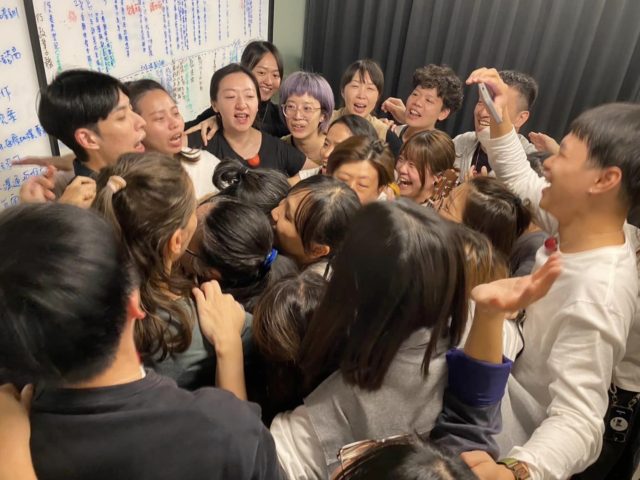
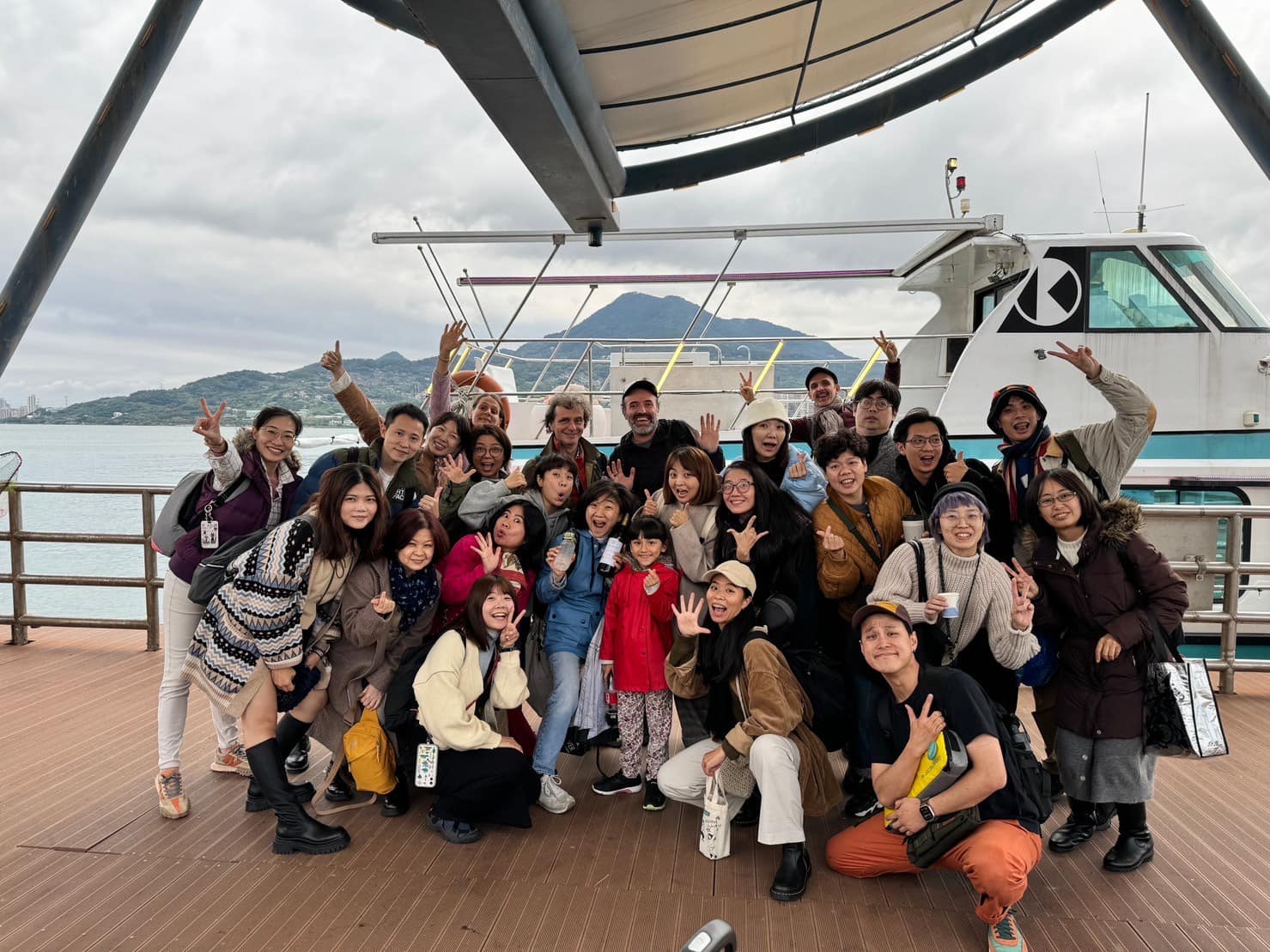
Every year, the Red Nose Care Clown Association holds intensive training for the clown performers within the association. This is an annual major event: the only opportunity throughout the year for all the clowns from northern, central, and southern Taiwan to gather together. Each time, the association also invites renowned masters from abroad to teach the association’s clowns.
The purpose is to enhance the clowns’ inner cultivation and performance quality, while also providing everyone with an opportunity to exchange ideas and strengthen their bonds with one another.
Each five-day intensive training course, though brief, leaves everyone feeling as if they have been enlightened, like taking a strength-enhancing pill, with their skills greatly improved. It not only advances their performance abilities, but also deepens our understanding of the significance of Medical Clown to children who are ill and to the entire healthcare system.
Last year was our first intensive training since the pandemic. We invited teachers Lory Leshin and Bernie Collins from France. The former taught us basic clown performance skills and helped us rediscover the clown spirit and rapport, while the latter taught us about the historical development and analysis of clown makeup and styling, and gave the clowns one-on-one styling advice, doubling the refinement and theatricality of each clown’s overall look.
This year, we once again invited teachers from France, Julien Gigault and Christian Têtard. The former taught us methods for constructing clown improvisation, while the latter taught us about music and clown performance.
It can be said that these five days of intensive training gave us all a shocking education and served as a profound wake-up call, reminding us of many of the most basic principles and attitudes of clown performance. (There were also many moving and exhilarating moments that brought us to tears…….)
Question 1: What exactly is clown performance?
- It is not actually a character with a prewritten script. A clown is more a state (état/state of mind) or a spiritual attitude (être/being)
- The clown is a reflection of the actor’s inner self. When performing as a clown, the actor is also their own director and playwright.
- But the clown is not identical to the actor. The two must maintain a certain distance. Within this distance, the clown can play freely, while the actor is the controller behind the scenes.
- The most important thing in clown performance is that all emotions are sincere and come from the heart, while also being able to play with those emotions and find joy. Even when feeling sad, the clown can find the joy of play within the sadness. The actor, meanwhile, calmly controls everything from behind.
- In front of the audience, the clown is like an open book. Every emotion felt in the moment, every awkward or unbecoming aspect, things normally wished to be hidden, shortcomings, desires, and the full range of human emotions are presented onstage without reservation. But all of this belongs to the red-nose clown, not the actor themselves. The red nose worn on the actor’s face is the mask that protects the actor.
- For a clown, failure is not the end of the world. On the contrary, by facing failure, the clown learns to accept their own imperfections and continues tirelessly striving toward goals that can never be reached. What matters is not the result, but the moving humanity revealed along the way (humanity). Failure, for a clown, is a gift that has fallen from the sky. Besides, who says clowns are destined to fail?
- What moves people about a clown is not how capable they are (though skill is certainly needed to support the performance), but their ability to establish a strong connection with the audience. They immediately convey to the audience what they are feeling in the moment, allowing the audience to experience together the clown’s joys and sorrows, anger and happiness. Letting the audience be with the clown.
- To be a good clown, one must be able to remain composed and not be disrupted by the actor’s own anxiety (the actor must stay calm). Wait for things to happen, and experience the moment with genuine emotions. The audience needs time and space to enter the clown’s world; one must take it slowly.
Question 2: What exactly is the significance and magic of Medical Clown in hospitals?
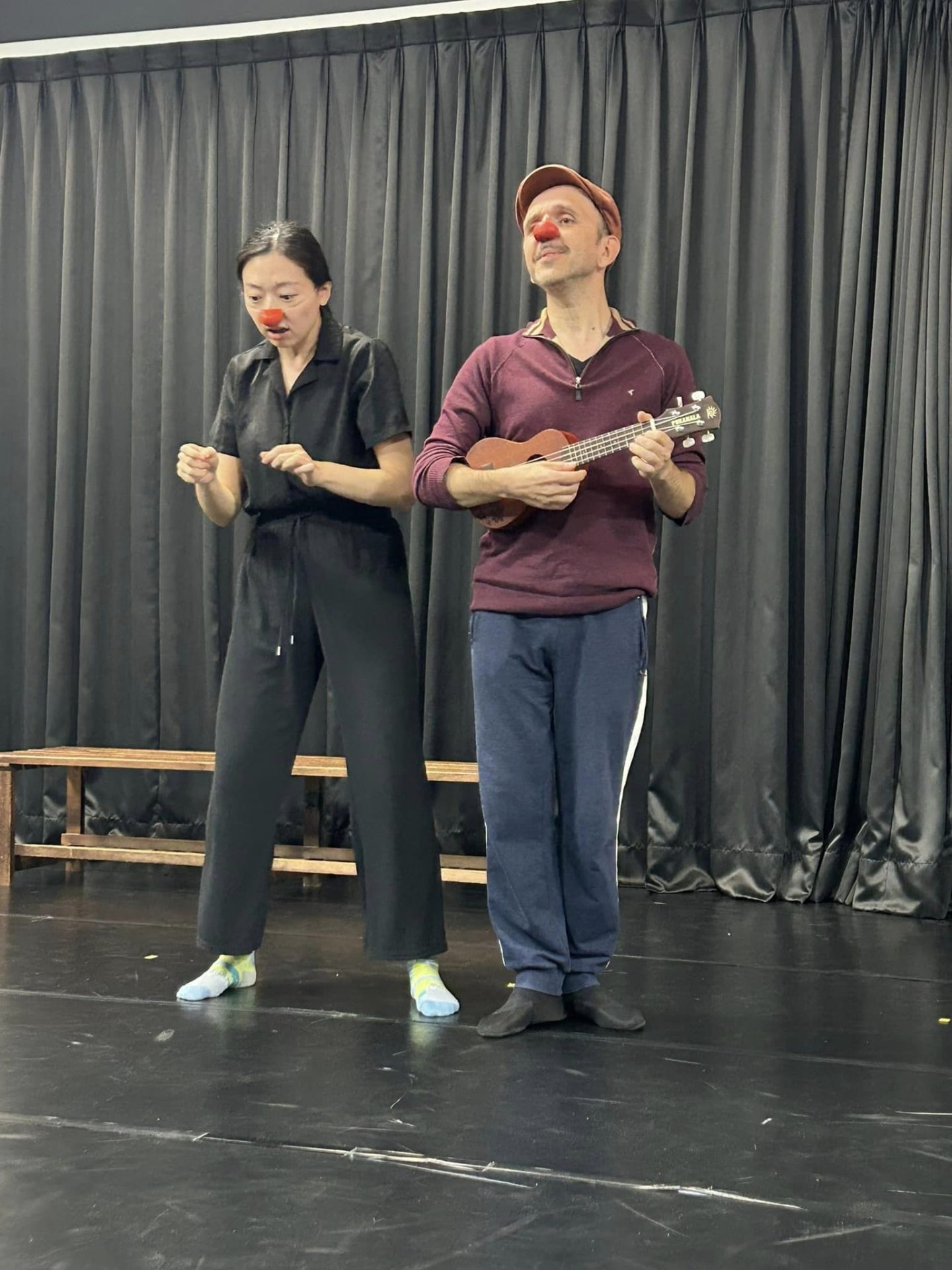
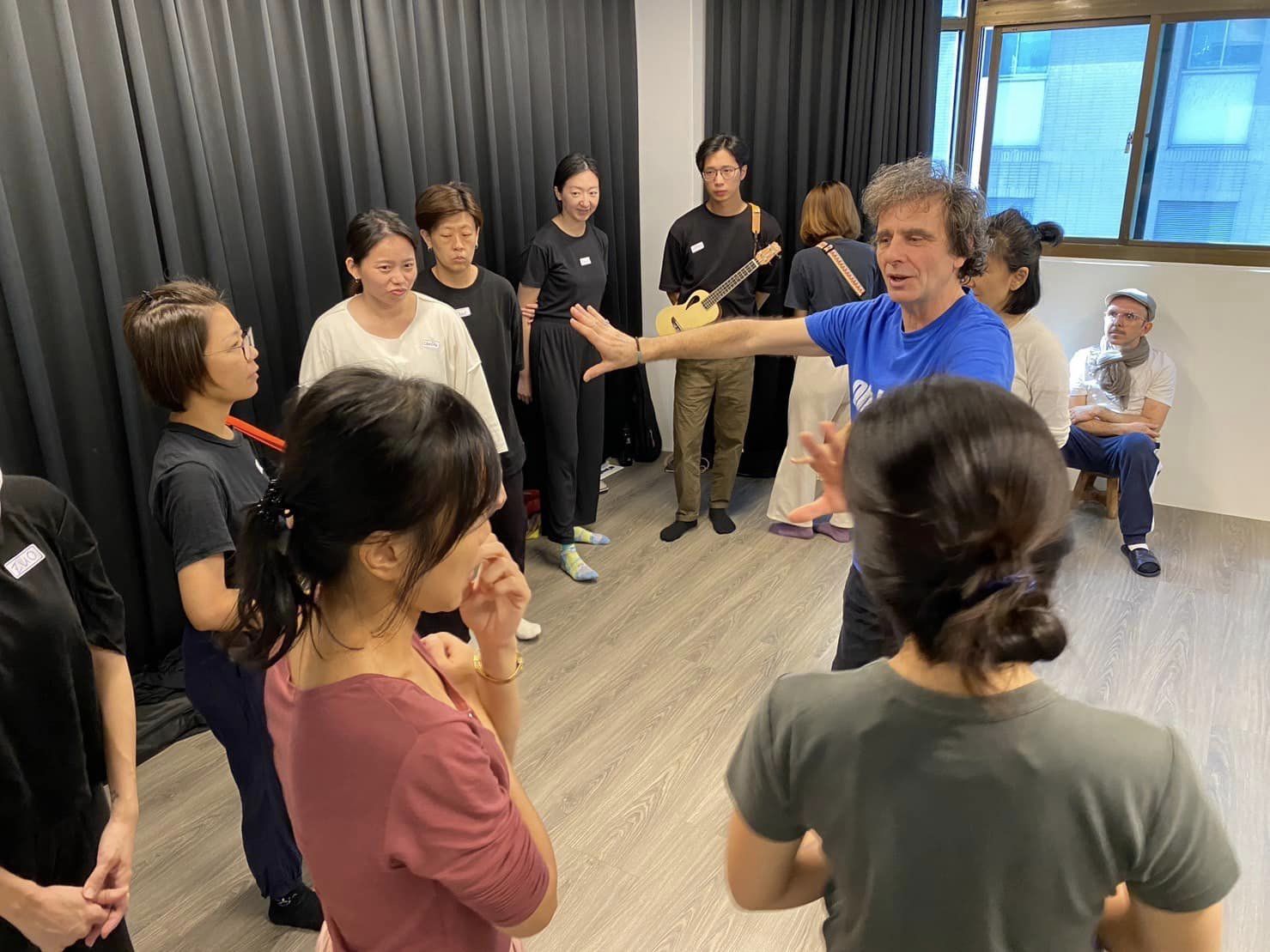
Dr. Red Nose Nunu and Bob presenting their workshop training
- Children who live in hospitals have lost many things: the ability to control their own time and space, the ability to play like ordinary children, the ability to attend school, the ability to refuse⋯. Of course, they come to the hospital to receive treatment and recover their health, and the medical team works wholeheartedly toward this goal, like angels. But the children’s emotional and spiritual needs still require care.
- As strange presences (funny clothes, strange red noses, what? There are clowns in the hospital? And they perform music, magic, puppetry, comedy?), Medical Clown break the hospital’s established stereotypes and bring the colorful outside world into the monotonous medical environment. They are like troublemakers, or like innocent, worldly-naive people who know nothing, bursting into a world full of rules and equipment. Just as sick children are suddenly cast into the world of the hospital, so are clowns.
- Medical Clown and the sick children living in hospitals share a powerful connection. They are emotionally interdependent partners and comrades who give each other strength.
- One is a clown facing a life full of challenges; the other is a child who feels inferior and defeated because of physical illness. Children see their own reflection in the clown.
The difficulties a clown encounters during a performance are a metaphor for the realities of a child’s life. At the same time, when a sick child sees the clown reveal their vulnerable side and reaches out a sympathetic hand, it proves that the child still has strength.
More importantly, Medical Clown’ performances tell children: failure is not frightening.
Sometimes it is a gift that has fallen from the sky, giving us the courage to look directly at life and imbuing it with value.
To Medical Clown, every child is equal. Even at the end of a child’s life, they have the right to enjoy art and happiness. Clowns are not physicians and cannot provide treatment. Our work is simply to genuinely accompany children and their families for a while: listening to songs together, looking at the trees outside together, imagining together, and dreaming together. Letting every child become who they should be.
This is also why every clown at Dr. Red Nose is a professional performing artist who continually develops their artistic abilities.
Because we want to give children the very best. Through our actual performance experiences in hospitals, we have learned that art truly can heal. And a smile is the best medicine for the soul.
Finally, I feel incredibly fortunate to be able to work with such a wonderful team. Every day I go to work at the association and perform at hospitals, I am immersed in happiness. There are still many opportunities and challenges ahead. Let’s keep going together!
Thanks to the National Culture and Arts Foundation and the Department of Cultural Affairs, Taipei City Government, for supporting our ability to invite such wonderful instructors to Taiwan.
We also thank the French organization Le Rire Médecin and its founder, Caroline Simonds, for their wholehearted support and encouragement along the way.
Written by: Ma Chao-Chi, Founder of Dr. Red Nose